How Builder Incentives and Carrying Costs Shape Summerlin West Prices
September 10, 2026
September 10, 2026
Walk into a builder's sales office in Kestrel on a Saturday afternoon and the whiteboard behind the desk usually has a rate written on it in dry-erase marker, something like 2.99 percent for the first year, funded by the builder, offered alongside the house you're about to tour. Drive two miles south to a resale listing in The Vistas and there's no whiteboard. There's a sign rider, a lockbox, and a seller who financed at whatever rate the market handed them the day they bought, hoping the next buyer will do the same.
Those two rooms are twenty minutes apart and they are, on paper, the same market. But in 2026 they've started producing numbers that don't agree with each other, and the disagreement isn't a data error. It's the clearest signal available right now for what's actually happening to home values across Summerlin's western villages.
Realtor.com's read on Summerlin West for June 2026 showed a median sold price of $882,500, up 2.32 percent year over year, with homes moving in a median of 47 days and active listings climbing nearly 15 percent. That combination, rising price and rising inventory, got classified as a buyer's market, which sounds contradictory until you remember that price and negotiating leverage are not the same measurement.
Redfin's own cut of Summerlin West, drawn from March 2026 closings, told a different story. Median sale price there came in at $805K, down 2.5 percent from the same period the year before. Days on market nearly doubled, from 65 to 98. Sales volume dropped too, 162 homes closed that March versus 171 the year before.
Neither number is wrong. They're measuring overlapping but not identical pools of transactions, at different points in the year, and the gap between them is wide enough that a buyer comparing the two sources would reasonably wonder if they're looking at the same neighborhood. They are. What's changed is what's inside the pool.
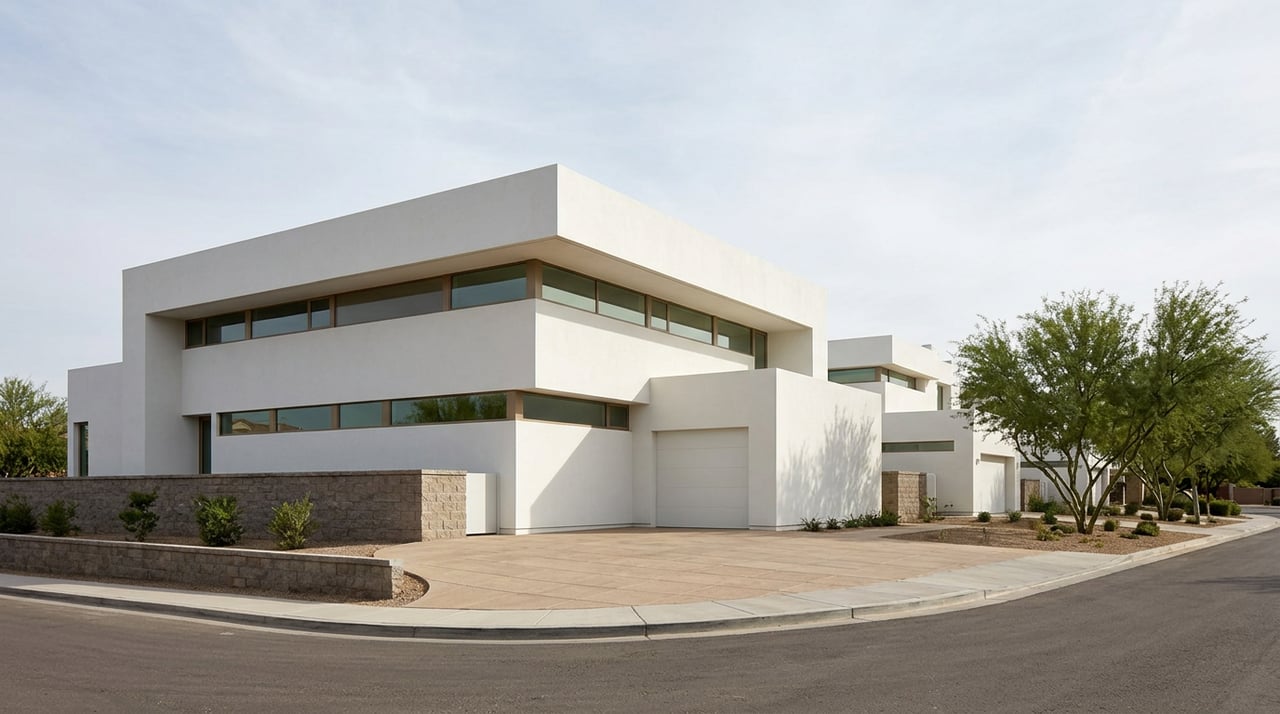
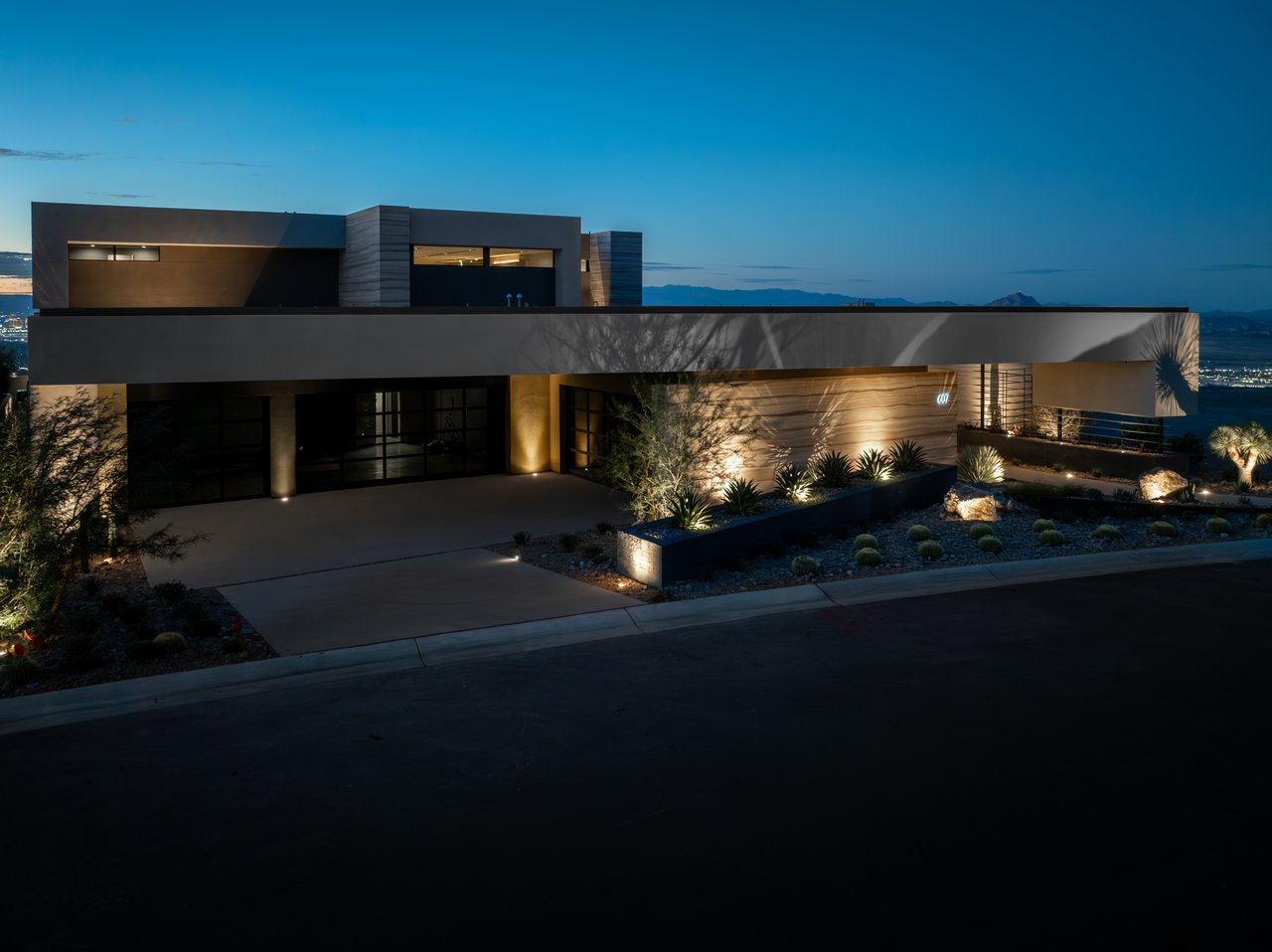
Summerlin West in 2026 is not one housing product. It's an established layer of villages, The Vistas, The Paseos, and a mature Stonebridge that's been selling since before most of its trees needed staking, sitting next to an active construction layer in Kestrel and Redpoint, where new-construction pricing runs from roughly $600,000 to more than $1.5 million for view-lot builds with premium finishes.
When a wave of new-construction closings lands in a given quarter, at $700K, $900K, $1.2 million, the topline median gets pulled up even if not a single resale home in the community appreciated. When resale activity dominates a different quarter, the median settles back toward what an established Vistas or Paseos home can actually fetch on its own. Two snapshots taken a few months apart, weighted toward different parts of that mix, will tell you two different stories about the same 6,000 acres.
That's the mechanism behind the contradiction. Summerlin West isn't simultaneously appreciating and depreciating so much as it is two markets sharing one label, and "Summerlin West median price" has quietly become a blended number covering products that have almost nothing else in common.
The new-construction side of that blend carries something the resale side structurally cannot offer: a builder-funded rate buydown. Builders active in Redpoint and Redpoint Square, including Toll Brothers on larger view lots and Richmond American through its design-center collections, have been pairing list prices with financing incentives rather than price cuts. One builder in the area has offered tiered rates starting at 2.99 percent in the first year of the loan.
That incentive is not reflected in a median sold price. The house closes at its contract price, full stop, and the buydown shows up on the settlement statement as a builder concession rather than a discount to the sale price itself. But the value is real. On a $600,000 loan, landing an effective rate a full point below the going market rate is worth more in the first few years of ownership than a meaningful price reduction would be, and it never touches the number that Realtor.com or Redfin reports as the sale price.
This is one part of the Summerlin West story that a portal median does not capture. New construction isn't necessarily appreciating faster than resale. It's competing on a dimension resale can't match, and the price tag alone doesn't capture the financing incentive.
A seller in an established Summerlin West village doesn't have a lender relationship that lets them buy down a stranger's mortgage rate. Their only lever is the list price itself. When new construction two streets over is effectively discounting borrowing costs by a point or more, a resale home competing for the same buyer pool has one option: cut the number that actually appears on the listing.
That's the mechanism behind the falling price per square foot and the stretched days on market that show up in the resale-heavy data cuts. It isn't that buyers stopped wanting an established village with mature trees and a finished yard. It's that the price comparison a buyer runs in their head, monthly payment against monthly payment, now has to account for a buydown on one side of the ledger that doesn't exist on the other. Resale sellers who list at last year's price, assuming the market simply carried forward, are the ones sitting past 90 days.
There's a second distortion worth flagging, because it runs in the opposite direction from what most buyers expect. Summerlin's three master associations each carry their own base monthly fee for 2026, and Summerlin West, the highest-priced of the three submarkets, actually carries the lowest one.
| Master Association | 2026 Monthly Fee | Plus Summerlin Council |
|---|---|---|
| Summerlin North | $74 | +$37 |
| Summerlin South | $76 | +$37 |
| Summerlin West | $69 | +$37 |
Every address also pays an additional $37 a month to the Summerlin Council for parks, trails, and community-wide programming, so the total base assessment lands close together across all three, somewhere in the low $100s monthly before any village or gated sub-association fee. On that line item alone, West looks like the bargain.
It isn't. Summerlin West carries a Special Improvement District or Local Improvement District obligation that the master fee line never touches. That assessment, used to finance the roads, sewers, and infrastructure that made the newer villages buildable in the first place, varies by parcel, and it appears on the Clark County property tax bill rather than the HOA statement. A buyer comparing a $69 monthly master fee in Kestrel against a paid-off SID in an older Vistas phase is not comparing two homes with similar carrying costs. They're comparing a low visible number against a low visible number that has an invisible one sitting right behind it.
Buyers should check the current SID balance on any Summerlin West parcel when comparing carrying costs. The obligation is public record and it's checked against the individual parcel, not the village as a whole, so two homes on the same street can carry different remaining balances depending on when each was built and how much of the original bond has amortized.
The practical takeaway isn't that one side of Summerlin West is a better buy than the other. It's that the number most buyers lead with, the median price they saw on a portal last week, isn't built to answer the question they're actually asking.
If you're weighing a new build in Kestrel against a resale home in an established Summerlin West village, the comparison worth running is the all-in monthly number: mortgage payment at the effective rate after any builder buydown, plus master fee, plus village or gated sub-association dues, plus the annualized SID or LID obligation divided by twelve. Two homes priced $50,000 apart can land in almost the same place once every layer is accounted for, and the home that looked cheaper on the sign can turn out to cost more every month.
It's also worth asking which pool of transactions produced whatever median you were quoted, and over what window. A number pulled from a quarter heavy with new-construction closings will read differently than one pulled from a quarter dominated by resale, and neither is more honest than the other. They're just measuring different things.
If you're trying to make sense of what a specific Summerlin West property is actually worth, in either direction, that's a conversation best had with someone who can pull the comparable sales for that exact village and product type rather than a community-wide average. Gianni Sammarco works these villages block by block and can help you separate what the headline number is telling you from what your actual carrying cost will be. Request a private market consultation and valuation before you anchor to a median that may not describe the house you're looking at.
This article is general information, not legal, tax or financial advice. Consult a qualified professional about your situation.

Gianni looks forward to providing you a unique boutique memorable real estate experience from start to finish. Contact Gianni today!
9525 W. Russell Rd. Ste C. 120 Las Vegas, NV 89148